Family Churches and Burial Grounds
Visiting family churches and burial grounds can open doors to family history. Regardless of your beliefs, or your feelings about “graveyards”, it’s worth remembering that in the United States, most of our ancestors attended a local church and were laid to rest in its cemetery, often surrounded by relatives. Some families even had private graveyards on their own property. Depending on the time period, grave markers may still stand, or they may have weathered away. Either way, these places preserve memory, legacy, and often the missing pieces of our genealogical puzzles.
FAMILY CHURCHESFAMILY GRAVEYARDS
Wayne Karl Driver
10/27/20252 min read
Introduction
Growing up, I was terrified of funerals, and cemeteries were even worse. If I saw a hearse rolling down the street, I would dart inside the house. When relatives passed, I’d find every excuse possible to skip the service. With time and maturity, I learned to manage those fears, but I never imagined cemeteries would one day become part of my research routine.
At the same time, I was slowly beginning to understand the role of the Black Southern church—often a generational institution where families worshipped, celebrated, grieved, and ultimately buried their loved ones. My own childhood in Philadelphia was different. We attended my paternal grandfather’s church, Vine Memorial Baptist, in West Philadelphia, and my maternal grandmother’s church, First Baptist of Pascal, in Southwest Philadelphia. Once my grandparents passed, my parents moved on to The Worldwide Church of God (that story is for another day). Neither of those earlier churches was truly a family church—they were our grandparents’ choices, rooted in their home communities.
My First Encounter with a Family Church
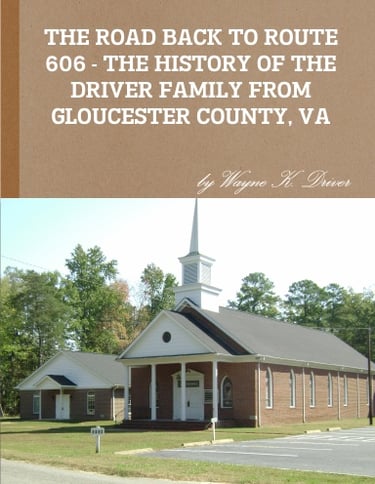
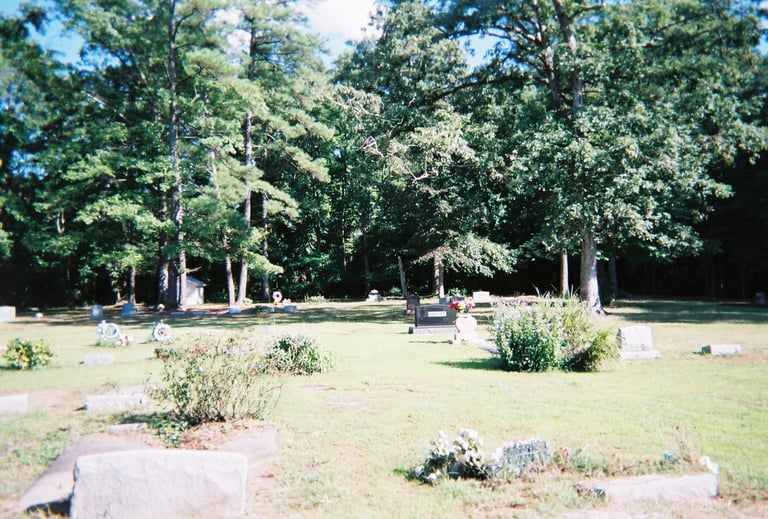
I’ll never forget my first visit to Shepherdsville Baptist Church in Gloucester County, Virginia, the Driver family church. Family names adorned the stained-glass windows, gifted as dedications by earlier generations. Just behind the church lay the cemetery, quiet and watchful. Standing among the headstones, I surprised myself by feeling at ease. Perhaps it was because I wasn’t just in a “graveyard”, I was in a space of memory, history, and family.
As I read each name, recognizing the connections, my fear gave way to curiosity. That first trip was with family members, which probably helped. But afterward, I found myself willingly wandering into other burial grounds on my own, notebook in hand. The fear of cemeteries had shifted into a reverence for what they could teach me.
Why Churches and Burial Grounds Matter in Research
Family churches and burial grounds are genealogical goldmines. They preserve:
Names carved in stone, often when written records are scarce.
Connections are visible in how families are buried near each other.
Stories told through church windows, plaques, and even oral histories kept alive by long-time congregants.
Of course, today we have tools like Find a Grave, which make searching cemeteries more convenient. Many churches also have websites or digitized histories. But nothing compares to walking into a church where your ancestors once sang hymns or standing in the cemetery where entire generations rest. These places remind us that genealogy is not only about documents—it’s about place.
Local Lessons: History Rooted in Community
From my other research into similar communities, I’ve learned that local churches and burial grounds were often the center of Black family life. They weren’t just spiritual havens; they were schools, meeting halls, and guardians of community memory. In rural areas, family burial plots, sometimes hidden on old farmland, tell stories of resilience and self-determination.
When these sites are visited, mapped, or even photographed, they add another branch to the family tree that paper records alone can’t capture. They show how families moved, worshipped, and stayed connected long after census takers stopped knocking on their doors.
Final Thoughts
If building your family tree feels stuck, consider adding this step: visit a family church or burial ground. Bring a notebook, take photos, talk with church elders, or simply walk the grounds. What you find may surprise you.
For me, those once-feared graveyards became a doorway—not just to death, but to life, legacy, and the roots of family.
Connect With Us
To stay informed about the latest research and discoveries, connect with us on our social media channels.
© 2025. All rights reserved.
Let's Keep In Touch