Legacy: Honoring the Past, Living the Present, Shaping the Future
"The greatest use of a life is to spend it on something that will outlast it." — William James
DRIVER, JACKSON, JACKMAN, AND MAPP FAMILY LEGACY
Wayne Driver
6/18/20264 min read
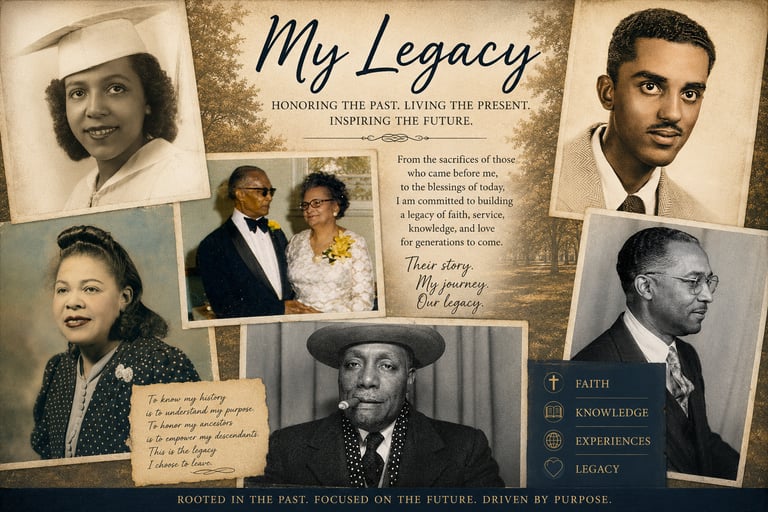
It started with a question I couldn't let go of.
Who were the people whose lives made my life possible?
That question would eventually take me across oceans, through archives, into churches and courthouses I never imagined visiting — and back again, changed. But before I found answers, I had to reckon with what I was really asking. I wasn't just chasing names on a census record. I was chasing something harder to name: legacy.
The Word We Toss Around
The word legacy is everywhere, and we rarely stop to ask what it actually means.
Sports fans debate it endlessly. Every generation argues about who deserves to be called the GOAT — Michael Jordan or LeBron James? Tom Brady or Joe Montana? These are really debates about legacy. Who had the greatest impact? Whose accomplishments changed the game? Who will still be remembered a hundred years from now?
Hollywood understands the word, too. Consider the arc of the Jason Bourne franchise: The Bourne Identity. The Bourne Supremacy. The Bourne Ultimatum. The Bourne Legacy. The progression is interesting. A story that begins with identity, moves through conflict and resolution, and eventually arrives at legacy — the lasting consequence of a life and its choices.
Businesses speak of legacy brands. Universities celebrate legacy families. Politicians pursue lasting legacies. Authors hope their books become part of theirs.
Yet despite how often we use the word, we rarely define it. So let me offer a definition earned through years of research, writing, travel, and service:
Legacy is not what you are remembered for. It is what survives — the lasting influence of your choices, your values, your faith, and your stories on the people who come after you.
And legacy, I have come to believe, exists in three dimensions: the past we inherit, the present we inhabit, and the future we shape.
Dimension One — The Past: Understanding Where You Came From
My journey into legacy began in the archives.
Through genealogy, DNA testing, census records, land deeds, military documents, and family stories passed down and nearly lost, forgotten lives slowly emerged from the shadows of history. Some were farmers. Some were laborers. Some were educators and public servants. Some were mothers and fathers whose names never appeared in any history book.
Yet every one of them contributed to the story that eventually became mine.
Research took me beyond libraries and databases. It took me across oceans — to Zimbabwe, where I connected with relatives whose stories had been separated from mine by time and geography. It led to discoveries I never imagined and connections that redefined who I understood myself to be.
The deeper I dug into the past, the more clearly I saw this truth:
Legacy is not reserved for the famous.
Ordinary people leave extraordinary legacies. Most of our ancestors never accumulated great wealth. Many left no monuments, no businesses, no public recognition. Yet they left something equally enduring — values, stories, faith, examples of perseverance that continue to shape generations they never met.
What the Bible Says
The world measures legacy by achievement, wealth, and recognition. Scripture measures it differently.
Throughout the Old Testament, God repeatedly emphasizes the passing of faith from one generation to the next. When we read Psalm 145:4 — "One generation shall praise Your works to another, and shall declare Your mighty acts" — the focus is not on transferring wealth. It is on transferring testimony.
Moses instructed Israel: "These words that I command you today shall be on your heart. You shall teach them diligently to your children." (Deuteronomy 6:6–7)
Even the familiar verse in Proverbs — "A good man leaves an inheritance to his children's children" (Proverbs 13:22) — points to something larger than financial provision. Abraham's greatest legacy was not his wealth but his faith. David's greatest legacy was not his kingdom but his relationship with God.
Viewed through this lens, legacy becomes more than what we leave behind. It becomes what we pass forward.
Dimension Two — The Present: Living a Story Worth Preserving
Legacy is not only about our ancestors. It is about the choices we are making right now.
Every day, we are creating the history that future generations may someday study. And that history is not written in grand gestures. It is written in the conversations we have, the people we encourage, the knowledge we share, and the examples we set.
A career may end. A title may disappear. But influence remains.
For me, the present chapter of legacy has unfolded through public service, faith, mentoring, research, and travel. One of the greatest gifts of slow travel — of actually staying in a place long enough to know it — is perspective. Whether walking through historic European cities, standing in the American South where history unfolded on the ground beneath my feet, or connecting with relatives across continents, I have been reminded that every culture wrestles with the same fundamental question:
How will we be remembered? And what are we doing today to earn the answer?
Legacy lives in the present. Our daily choices become tomorrow's history. The stories we choose to tell — or fail to tell — shape what the next generation inherits.
Dimension Three — The Future: Preserving the Wisdom
A legacy only lasts if it is passed forward. And it can only be passed forward if it is preserved.
Perhaps no part of this work has become more meaningful to me than writing. Books preserve what memory eventually forgets. Stories survive when they are written down. Research survives when it is documented. Lessons survive when they are shared.
This conviction has shaped every project I have undertaken:
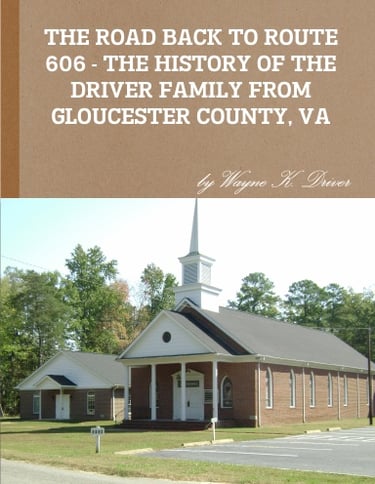
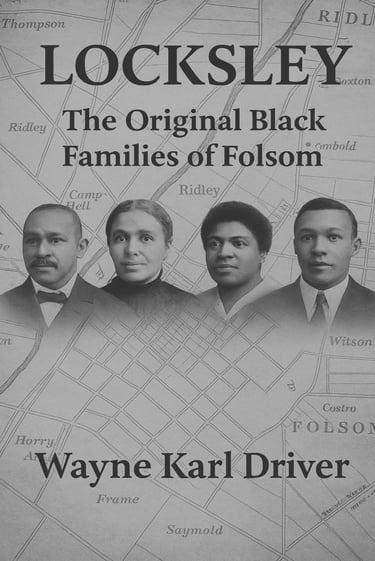
The Road Back to Route 606 — The History of the Driver Family from Gloucester County, Virginia. Locksley: The Original Black Families of Folsom, Pennsylvania. Good Government Job (forthcoming, 2027). Appy Mapp and the Civil War (forthcoming, 2027). Ongoing DNA and genealogy research projects. Future historical and family history works.
Each of these is a bridge between generations. Each page represents knowledge that might otherwise disappear. Long after the author is gone, the words remain.
That is one of the most powerful forms of legacy — not fame, not fortune, but preserved wisdom. Not the headline, but the record. Not the monument, but the story.
The Question That Remains
While the world debates the legacies of athletes, entertainers, executives, and politicians, a more important question tends to go unasked:
What legacy are you building right now?
Not everyone will become famous. Not everyone will build a fortune. Not everyone will have their name remembered in history books. But every one of us will leave something behind.
The question is what.
Will it be a legacy of faith? A legacy of service? A legacy of knowledge passed to the next generation? A legacy of stories preserved before they are lost?
Because one day — perhaps sooner than any of us imagine — someone will ask the same question that launched my journey:
"Who were the people whose lives made my life possible?"
May there be an answer waiting for them.
May that answer include you.
Connect With Us
To stay informed about the latest research and discoveries, connect with us on our social media channels.
© 2025. All rights reserved.
Let's Keep In Touch