Walter Franklin Jackman: A Glimpse into Gloucester Farm Life (1863–1919)
This blog explores the life of Walter Franklin JACKMAN, born in Gloucester County, Virginia, during the Civil War. Through family memories, historical research, and a narrative vignette, we gain insight into what daily life was like for Walter, his wife, Mary Ellen BRISTOW, and their nine children. It is both a tribute to a family patriarch and a window into the resilience of Free People of Color in post-war Virginia.
JACKMAN FAMILYLEMON FAMILYGLOUCESTER COUNTY, VAWOODS CROSS ROADSBRISTOW FAMILY
Wayne Karl Driver
10/20/20255 min read
Introduction
When I was a little boy, I would visit my paternal grandmother’s home place, where the Jackman family had lived for generations. We stayed on my Aunt Mary’s farm, an actual working farm with chickens, pigs, and even a cow. Everyone who ate also worked. As a northern city boy, I didn’t know the first thing about farming, but that didn’t stop Aunt Mary from sending me out with the other children to do chores.
At the time, I didn’t know much about my grandmother's family living in Gloucester County, Virginia, beyond that farm. Years later, as I began digging into our family history, I learned more through conversations with my cousin Alice. The more I researched, the more I found myself asking: What was life really like for our ancestors who farmed this land long before my childhood visits?
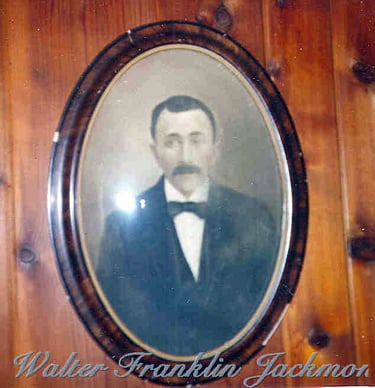
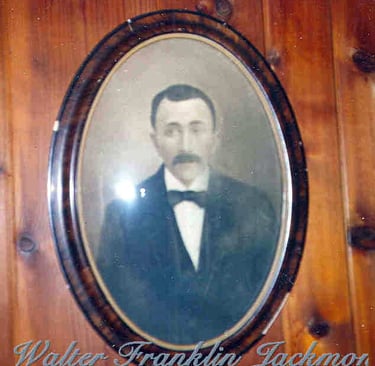
That question led me back to Walter Franklin Jackman (1863–1919), my great-grandfather. With the help of historical records, family documents, and local history, I’ve pieced together a glimpse into his daily life, not as a dry list of dates, but as a living story. What follows is a vignette, a creative reconstruction of Walter’s world on Woods Cross Road in Gloucester County, Virginia.
This vignette is not intended to be exact in every detail, but rather to paint a picture of what life might have been like for Walter, his wife, Mary Ellen Bristow, and their children. It is a way to honor their struggles, joys, faith, and resilience, and to help us imagine their voices echoing across the generations.
Vignette: A Day in the Life of Walter Franklin Jackman (c. 1882–1919)
My name is Walter Franklin Jackman. I was born in Gloucester County, Virginia, on July 6, 1863, the son of Edward “Ned” Jackman and Sarah Lucy Lemon. The war was raging then, and though I was too young to remember the cannon fire, I grew up among its scars — fields left barren, families broken, and a community of free people of color like ours determined to hold on to what we had.
By 1882, I was twenty years old, working the land my father had worked before me. Our farm was modest, like most on Woods Cross Roads: a patch of corn, rows of sweet potatoes, a garden for beans and greens, and a strip of tobacco we hoped would fetch cash. Father always said the sandy soil demanded as much sweat as prayer. Still, the land gave us what we needed, if we respected it.
That year was a turning point in my life. On March 22, 1882, under the hand of the Reverend John William Booth, I married Mary Ellen Bristow, daughter of William and Ann E. Bristow. She was just nineteen, strong and steady, the kind of woman who could manage a household and walk with me through every trial the Lord set before us. Our marriage was more than two young people joining together; it was the binding of two old Gloucester families, Jackman and Bristow, both long known among the free people of color in this county.
Together we raised nine children on our farm, each one a blessing and a responsibility. From dawn to dusk, the work of farming, fishing, and keeping house was woven into the laughter and tears of raising a family. Our children carried the Jackman and Bristow lines forward into a new century.
Sundays brought rest and renewal. We worshiped at New Mount Zion Baptist Church, the heart of our community. The hymns lifted us above the hardships of farm life, above the memories of bondage that haunted our elders, above the fever and sickness that too often stalked our homes. Church was where we named our children, buried our dead, and held fast to the promise that tomorrow could be better.
The years were not without sorrow. Illness often came to our part of Virginia. Neighbors fell to fever, to consumption, to the wasting sicknesses that no doctor could cure. In the summer of 1919, I myself was struck down by cholera morbus, a merciless stomach affliction that took my life on July 22, 1919. This was just after the great influenza of 1918/1919. I was only fifty-six. Mary Ellen lived on until March 15, 1936, when a cerebral hemorrhage carried her home at the age of seventy-two. We both found our rest in the grounds of New Mount Zion Baptist Church Cemetery, side by side, where generations of Jackmans' and Bristows' now lie.
Looking back, I see our lives not as grand, but as steady: tilling the soil, raising families, holding tight to our faith, and carving out a place for ourselves in Gloucester. We were the children of Edward and Sarah, of William and Ann, of men and women who had endured much. And though our hands were calloused and our days were long, our names remain — carved in stone at Mount Zion, remembered in the songs of our church, and living on in the children who carried the Jackman and Bristow lines forward.
👶 The Children of Walter & Mary Ellen (Jackman)
Clara Lee Jackman Wilson – Eldest daughter, often shouldering responsibility for her younger siblings.
Hollis Franklin Jackmon – The first son, carrying forward Walter’s middle name.
Sarah L. Jackman – Named after her grandmother, Sarah Lucy Lemon Jackman.
Louise Jackman Cooke – A bridge to the new century, with a name reflecting changing times.
Della Marshall Jackman Hodges – Middle name hints at extended family or respected ties.
William “Willie” Boyd Jackman – His middle name Boyd, suggests another kinship link worth tracing.
Mary Gladys Jackmon Driver – My grandmother, who carried the family legacy forward.
Lillian Jackman Bryant Cain – Reflects popular names of the early 1900s.
Walter Lee Jackman – The youngest son, carrying his father’s name into the future.
📖 Sidebars & Historical Notes
🪦 Cholera Morbus
A 19th-century term for violent stomach illness (often food poisoning, cholera-like bacteria, or dysentery). In rural Tidewater, outbreaks were common in summer and could be fatal within days.
⛪ New Mount Zion Baptist Church
Founded in 1873 by formerly enslaved trustees near Woods Cross Roads, New Mount Zion became the heart of the African American community. It provided worship, education, meeting space, and a cemetery where families like the Jackmans and Bristows could preserve memories across generations.
📜 Rev. John William Booth
The minister who married Walter and Mary Ellen in 1882 performed many ceremonies across Gloucester. His work reflects the interconnected religious life of Black communities during the Reconstruction era. He was the 2nd Pastor of Bethel Baptist Church, one of the oldest churches in Gloucester County, Virginia.
🌿 Family Ties
The marriage of Walter (son of Edward Jackman & Sarah Lucy Lemon) to Mary Ellen (daughter of William & Ann Bristow) connected three long-standing FPOC families in Gloucester County, strengthening kinship networks that sustained them through post-war hardships.
🌿 The Lemon Legacy
Walter’s maternal family, the Lemons, left a deep mark on Gloucester’s religious life. In the 1790s, William Lemon — likely kin — served as pastor of Petsworth Baptist Church, then a predominantly white congregation. His leadership shows how Black religious figures shaped faith communities in Gloucester long before emancipation, a legacy Walter and his children inherited in their devotion to Mount Zion.
✨ Conclusion
For me, the Jackman story began with childhood visits to Aunt Mary’s farm, where I first learned what it meant to “eat by working.” Now, through research, records, and imagination, I can picture Walter Franklin Jackman’s daily life — the soil under his fingernails, the hymns in his church, the children who carried his name.
This vignette is a reminder that our ancestors were more than names and dates. They were people who lived, worked, prayed, and dreamed — and whose lives built the foundation on which we now stand.
Connect With Us
To stay informed about the latest research and discoveries, connect with us on our social media channels.
© 2025. All rights reserved.
Let's Keep In Touch